
 Cart is empty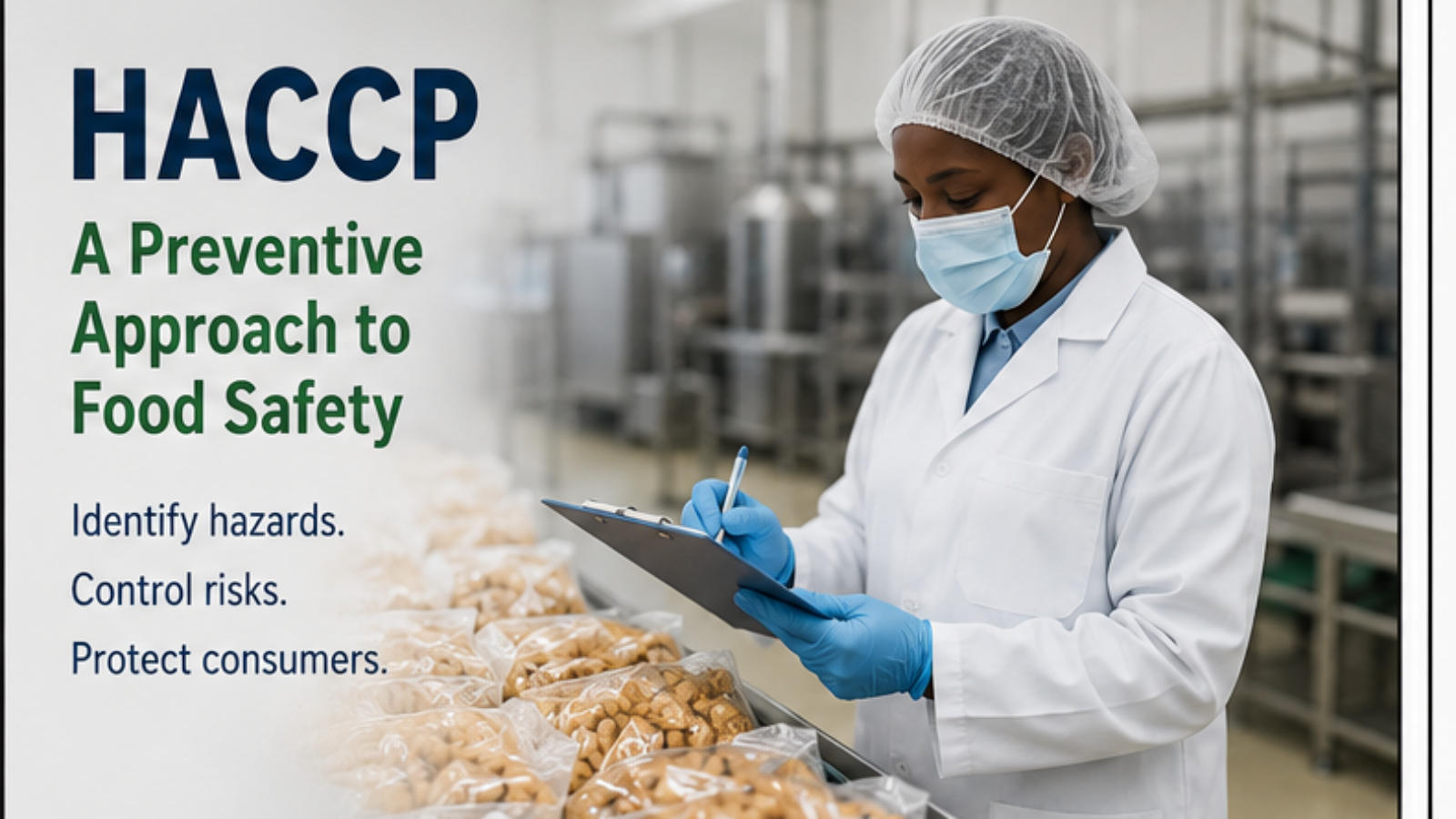
One of the most widely recognized food safety systems used globally is HACCP.
Food safety is a critical aspect of the food and beverage industry, whether you run a restaurant, hotel, catering business, bakery, food manufacturing company, or a processing plant.
But what is HACCP, and why is it so important?
In this comprehensive guide, we’ll explain the meaning of HACCP, the 7 HACCP principles, how the system works, and why food businesses in Kenya and around the world rely on it to improve food safety and compliance.
What Does HACCP Stand For?
HACCP stands for Hazard Analysis and Critical Control Points.
It is a preventive food safety management system designed to identify, evaluate, and control food safety hazards before they can affect consumers.
Unlike traditional quality control methods that focus on testing finished products, HACCP focuses on preventing food safety hazards during the production and handling process.
The HACCP system was originally developed in the 1960s by NASA and the Pillsbury Company to ensure safe food for astronauts. Today, it is used worldwide across the food industry and forms the foundation of many food safety standards, including ISO 22000 and FSSC 22000.
What Is HACCP, in Simple Terms?
In simple terms, HACCP is a structured food safety system that helps businesses identify possible hazards in food production and establish controls to prevent contamination.
This food safety system focuses on:
- Identifying food safety risks
- Preventing contamination
- Monitoring critical processes
- Taking corrective action when problems occur
- Maintaining food safety records
HACCP is widely used in:
- Restaurants
- Hotels
- Food manufacturing plants
- Catering companies
- Bakeries
- Dairy processing facilities
- Supermarkets
- Meat processing plants
- Export food businesses
In Kenya, many organizations increasingly require HACCP implementation to comply with customer, regulatory, and export requirements.
Why Is HACCP Important in Food Safety?
Food contamination can lead to serious health risks, customer complaints, legal action, product recalls, and damage to a company’s reputation.
The HACCP system helps businesses reduce these risks by proactively managing food safety hazards.
Importance of HACCP in Food Businesses
Implementing an effective food safety management system like HACCP is important in food businesses in that it:
1. Improved Food Safety
HACCP helps control harmful bacteria, chemicals, allergens, and physical contaminants before food reaches consumers. This prevents foodborne illnesses and improves food safety.
2. Improves Consumer Confidence
Customers are more likely to trust businesses that prioritize food safety.
3. Supports Regulatory Compliance
Many food regulators and certification bodies require HACCP implementation in food businesses.
4. Reduces Product Loss and Waste
Early hazard control minimizes spoilage, contamination, and rejected products. This protects the business from unnecessary food waste and associated losses.
5. Improves Operational Efficiency
HACCP introduces standardized procedures and better monitoring systems, which improve operational efficiency.
6. Supports International Trade
Export markets often require HACCP certification or equivalent food safety systems for a business to distribute its products globally.
Types of Food Safety Hazards Controlled by HACCP
The HACCP system focuses on identifying and controlling food safety hazards that may occur during food production, processing, storage, or handling.
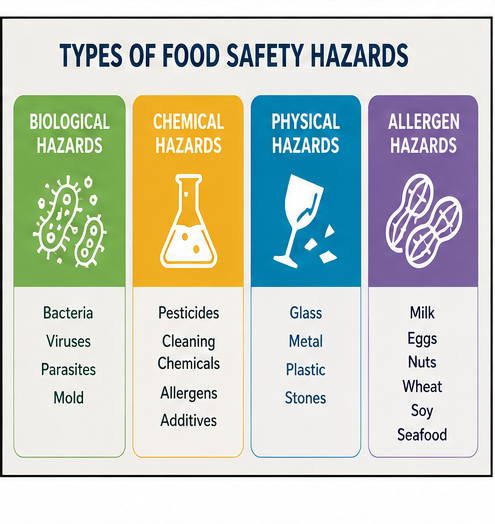
As seen in the infographic above, there are 4 different types of food hazards that HACCP can control:
1. Biological Hazards
These include harmful microorganisms such as:
- Salmonella
- E. coli
- Listeria
- Yeast and moulds
- Viruses
Biological hazards are among the most common causes of foodborne illness.
2. Chemical Hazards
Chemical hazards are chemical contaminants, which may include:
- Cleaning chemical residues
- Pesticides
- Food additives
- Allergens
- Lubricants
Proper handling and storage procedures help minimize chemical contamination.
3. Physical Hazards
Physical hazards are foreign objects that may contaminate food, such as:
- Glass fragments
- Metal pieces
- Plastic particles
- Stones
- Hair
These hazards can cause injuries to consumers when consumed with food.
4. Allergen Hazards
Food allergens are increasingly important in food safety management.
Common allergens that can affect consumers include: Milk, Eggs, Nuts, Soy, Wheat, and Seafood
HACCP helps businesses prevent allergen cross-contamination.
The 7 Principles of HACCP
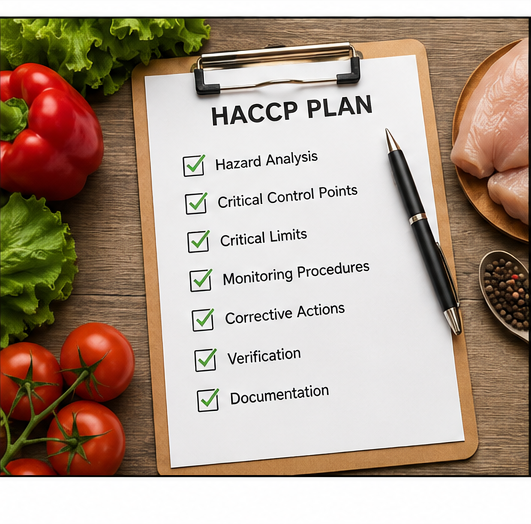
The HACCP system is built around seven internationally recognized principles. These principles act as the basic ‘steps’ to follow when implementing a HACCP system.
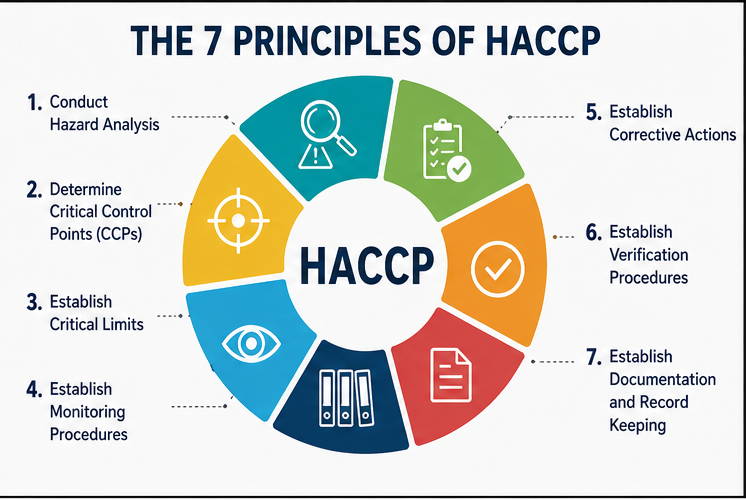
Principle 1: Conduct Hazard Analysis
Start by identify all the potential biological, chemical, physical, and allergen hazards associated with your products and processes.
Principle 2: Determine Critical Control Points (CCPs)
The second principle is to determine the Critical Control Points (CCPs). These are the stages where hazards can be prevented, eliminated, or reduced to acceptable levels.
Examples of CCPs include:
- Cooking
- Chilling
- Hot holding
- Metal detection
Principle 3: Establish Critical Limits
After identifying the CCPs in your processes, the next step is to determine the critical limits. These are the measurable criteria used to control the identified hazards.
Examples of critical limits include:
- Minimum cooking temperature
- Maximum storage temperature
- pH limits
Principle 4: Establish Monitoring Procedures
Next, establish the procedures that will be used to monitor the critical limits. Monitoring ensures CCPs remain under control at all times.
Examples of monitoring procedures include:
- Temperature checks using probes
- Visual inspections
- Cooking time monitoring using stop watches
Principle 5: Establish Corrective Actions
Once you have the monitoring procedures in place, establish corrective actions.
Corrective actions are steps to be taken when monitoring shows that critical limits have been exceeded.
For example:
- Reheating the food
- Discarding contaminated products
- Investigating root causes
Principle 6: Establish Verification Procedures
Establish verification procedures to confirm that the HACCP system is functioning effectively.
Examples of verification procedures include:
- Internal audits
- Calibration
- Product testing
- Review of records
Principle 7: Establish Documentation and Record Keeping
Documentation provides evidence that the system is properly implemented and maintained.
Common HACCP records that need to be kept and reviewed include:
- Temperature logs
- Cleaning records
- Training records
- Corrective action reports
- Audit reports
How the HACCP System Works
The HACCP process follows a structured and systematic approach designed to identify, evaluate, and control food safety hazards throughout the food production process.
Below are the key steps involved in implementation:
Step 1: Assemble the HACCP Team
A multidisciplinary team is needed to oversee the development and implementation of the HACCP system.
The team may include personnel from production, quality assurance, food safety, maintenance, purchasing, and management to ensure all aspects of the process are properly coordinated.
Step 2: Describe the Product
Clearly define the product being analyzed, including its ingredients, processing methods, packaging, storage conditions, shelf life, and intended use.
Understanding the product characteristics helps identify possible food safety hazards associated with the product.
Step 3: Develop a Process Flow Diagram
Create a process flow diagram to map out every stage of the production process, from receiving raw materials to final distribution. This helps the team to understand how the product moves through the facility and where potential hazards may occur.
Step 4: Verify the Flow Diagram
The HACCP team verifies the accuracy of the flow diagram by physically reviewing the production process on-site. This step ensures that no important stages, process steps, or movements have been overlooked.
Step 5: Conduct Hazard Analysis
At each stage of the process, the team identifies potential biological, chemical, physical, and allergen hazards that could affect food safety.
The team then analyzes the hazards by evaluating the likelihood and severity of each hazard and determining appropriate preventive measures.
Step 6: Determine Critical Control Points (CCPs)
Critical Control Points are stages in the process where control is essential to prevent, eliminate, or reduce food safety hazards to acceptable levels.
Examples of CCPs may include cooking, chilling, metal detection, or temperature control during storage.
Step 7: Establish HACCP Controls
Once CCPs have been identified, the business establishes critical limits, monitoring procedures, corrective actions, verification activities, and record-keeping systems.
These controls help ensure that hazards remain under control and that the system continues to function effectively over time.
HACCP Example in a Restaurant Kitchen
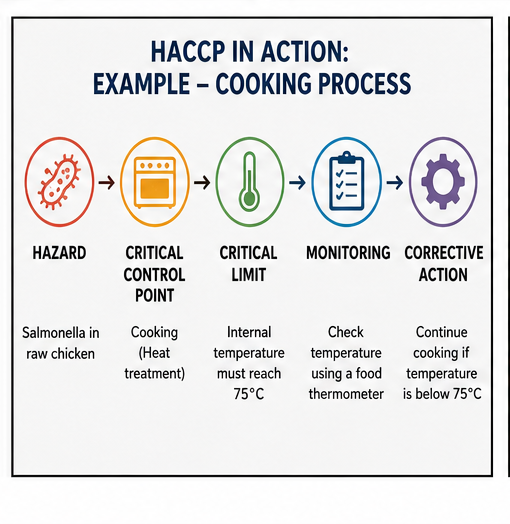
Consider a restaurant preparing grilled chicken. Here’s a simple illustration of what a HACCP system would look like in this case:
- Potential Hazard: Salmonella contamination from undercooked chicken.
- Critical Control Point: Cooking stage.
- Critical Limit: Chicken must reach an internal temperature of 75°C.
- Monitoring: Kitchen staff check the temperature during cooking using a food thermometer.
- Corrective Action: Continue cooking until the required temperature is reached.
- Verification: Product testing and calibration of the kitchen thermometers
- Documentation: Keeping a record of daily cooking temperature logs.
What Are HACCP Prerequisite Programs (PRPs)?
Prerequisite Programs (PRPs) are basic conditions and activities required to maintain a hygienic environment before implementing HACCP.
PRPs form the foundation of an effective food safety management system.
Examples of HACCP PRPs
- Cleaning and sanitation
- Pest control
- Waste management
- Personal hygiene
- Equipment maintenance
- Supplier approval
- Water quality control
- Staff training
Without strong PRPs, the HACCP system may fail.
HACCP vs ISO 22000
Many people confuse HACCP with ISO 22000. Although related, they have some notable differences.
What’s the difference between these two food safety standards? Here are some of them:
| HACCP | ISO 22000 |
| Focuses on food safety hazards | Comprehensive food safety management system |
| Based on 7 principles | Includes Quality management system requirements |
| Often regulatory requirement | International certification standard |
| Mainly operational | Includes strategic and organizational controls |
ISO 22000 incorporates HACCP principles together with Quality Management System (QMS) requirements.
Common Challenges in HACCP Implementation and Viable Solutions
Although the HACCP system provides significant food safety and operational benefits, many businesses face challenges during implementation and maintenance.
These challenges can affect the effectiveness of the food safety management system if not properly addressed.
Here are some common challenges businesses face when implementing HACCP and viable solutions:
1. Lack of Food Safety Knowledge
One of the most common challenges is a limited understanding of food safety principles among employees and management.
Some staff may not fully understand food safety hazards, critical control points (CCPs), monitoring procedures, or the importance of proper documentation.
Solution:
Invest in regular food safety training programs for employees at all levels to help build a food safety culture within the organization.
2. Poor Documentation and Record Keeping
Many businesses struggle with maintaining accurate HACCP records and documentation.
Missing, incomplete, or poorly organized records can lead to non-conformities during audits and reduce the effectiveness of the system.
Solution:
Establish clear documentation procedures and assign responsible personnel to manage records. Standardized forms, digital systems, and routine document reviews can help improve record accuracy and compliance.
3. Weak Prerequisite Programs (PRPs)
Prerequisite Programs (PRPs) such as cleaning and sanitation, pest control, waste management, personal hygiene, and equipment maintenance form the foundation of an effective HACCP system.
Weak PRPs often make it difficult to control food safety hazards effectively.
Solution:
Strengthen prerequisite programs before fully implementing HACCP. PRPs such as personal hygiene, pest control, and waste management should be consistently monitored and maintained.
4. Inconsistent Monitoring of Critical Control Points
Some businesses implement HACCP but fail to consistently and accurately monitor Critical Control Points.
Inadequate monitoring increases the risk of hazards going unnoticed, which may compromise food safety.
Solution:
Establish clear monitoring procedures for each CCP. Staff responsible for monitoring should be properly trained, and monitoring activities should be verified regularly through internal audits and supervisory checks.
5. Resistance to Change
Employees and even management may resist new food safety procedures because they see HACCP as complicated, time-consuming, or unnecessary.
Solution:
Actively promote a positive food safety culture by communicating the importance and benefits of HACCP. Involving employees in the implementation process and providing adequate support can improve acceptance and cooperation.
6. Limited Management Commitment
Successful HACCP implementation requires strong support from top management.
Without management commitment, businesses may lack the necessary resources, staffing, equipment, and time needed to maintain an effective system.
Solution:
Management should demonstrate leadership by supporting food safety initiatives, allocating resources, participating in reviews, and encouraging continuous improvement.
HACCP Training, Implementation, and Consultancy in Kenya
As food safety requirements continue to develop, many businesses require professional support for HACCP implementation and food safety compliance.
At SanaSafe Consulting Limited, we provide:
- HACCP training and implementation support
- Food safety audits
- Internal audits
- PRP development
- ISO 22000 consultancy
- Food safety documentation support
- Hygiene and sanitation training
We help restaurants, hotels, manufacturers, catering companies, and food businesses across Kenya improve food safety systems and achieve compliance.
Frequently Asked Questions About HACCP
What is HACCP in simple words?
HACCP is a food safety system used to identify and control food safety hazards before they cause harm. It stands for Hazard Analysis and Critical Control Points.
What are the 7 principles of HACCP?
The seven HACCP principles include hazard identification, identifying CCPs, setting critical limits, monitoring, corrective action, verification, and documentation.
Is HACCP mandatory?
In many food sectors, HACCP or similar food safety systems are required by regulators, customers, or certification standards.
What is the main purpose of HACCP?
The main purpose of HACCP is to prevent food safety hazards and protect consumers.
What is the difference between HACCP and ISO 22000?
HACCP focuses specifically on hazard control, while ISO 22000 is a broader food safety management system standard that includes QMS requirements.
Which industries use HACCP?
Restaurants, hotels, food manufacturers, caterers, supermarkets, and food processors commonly use HACCP.
Final Thoughts on HACCP
Understanding what HACCP is and how it works is essential for any food business committed to food safety and quality management.
HACCP provides a preventive approach to identifying and controlling food safety hazards, improving operational efficiency, and protecting consumers.
Whether you operate a restaurant, hotel, bakery, catering business, or food manufacturing company, implementing the system can help improve compliance, strengthen customer confidence, and support business growth.
If your organization needs HACCP training, implementation support, food safety audits, or ISO 22000 consultancy in Kenya, Contact SanaSafe right away, and we’ll be ready to help you.
Add a Comment