QMS Audit

What is a QMS Audit? A Complete Guide for Businesses in Kenya and Beyond

One of the most effective ways to evaluate and improve business performance is through a QMS audit.

A QMS audit helps organizations assess whether their Quality Management System (QMS) is functioning effectively, complying with requirements, and supporting continual improvement. 

In this guide, we explain everything you need to know about QMS audits, including the audit process, types of audits, common audit findings, benefits of QMS auditing, and the role of professional QMS Auditors in Kenya.

What Is a QMS Audit?

A QMS audit, also known as a Quality Management System audit, is a systematic and independent evaluation of an organization’s processes, procedures, records, and activities to determine whether the QMS is effectively implemented and compliant with applicable requirements.

QMS audits help organizations to identify gaps, nonconformities, inefficiencies, and opportunities for improvement before they become major operational or compliance issues.

Purposes of a Quality Management System Audit

A Quality Management System audit is not simply about finding faults. Instead, it is designed to help organizations improve performance and strengthen operational controls.

Organizations conduct QMS audits to:

  • Verify compliance with ISO 9001 requirements
  • Evaluate process effectiveness
  • Identify operational risks
  • Improve customer satisfaction
  • Strengthen process consistency
  • Monitor performance
  • Support continual improvement
  • Prepare for certification audits
  • Improve accountability

Effective QMS auditing enables businesses to make informed decisions based on objective evidence and performance data.

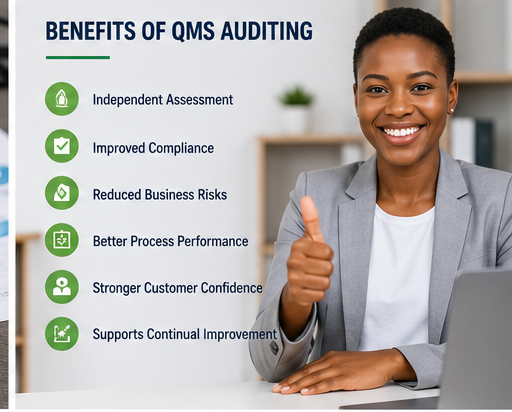
Benefits of QMS Auditing

QMS auditing provides numerous operational and strategic benefits to organizations:

Improved Compliance

QMS audits help organizations verify compliance with ISO 9001 requirements, regulatory obligations, customer expectations, and internal procedures. Regular audits ensure that businesses maintain consistent standards and quickly identify areas that require corrective action.

Better Operational Efficiency

Audits help identify process inefficiencies, workflow gaps, duplicated activities, and weak operational controls. 

By addressing these weaknesses, organizations can improve productivity, reduce waste, and streamline operations.

Enhanced Customer Satisfaction

Consistent product and service quality increases customer confidence and trust. QMS auditing helps businesses maintain high standards, reduce customer complaints, and improve overall customer satisfaction.

Reduced Risks

Audits help to identify operational, compliance, and process-related risks before they become major problems. 

Early identification of issues allows businesses to implement corrective actions and prevent costly disruptions.

Stronger Decision-Making

QMS audits provide objective evidence and performance data that support informed and data-driven decision-making.

Management can use audit findings to prioritize improvements and allocate resources more effectively.

Improved Accountability

Audits clarify responsibilities and strengthen accountability across departments and processes. Employees become more aware of their roles, responsibilities, and quality objectives within the organization.

Certification Readiness

Regular internal audits help organizations prepare effectively for ISO 9001 certification audits by identifying gaps and nonconformities early. 

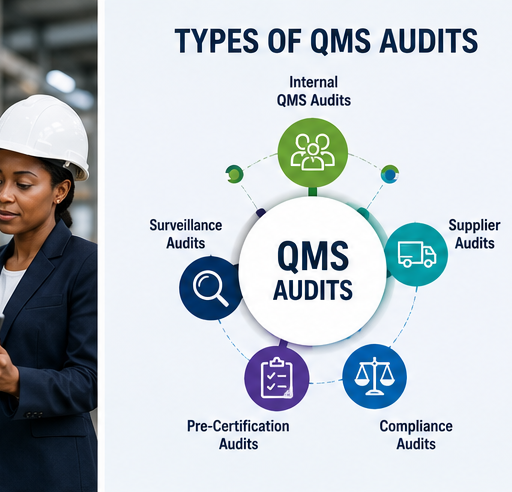
Types of QMS Audits

There are several types of QMS audits, each serving a different purpose within the organization.

Internal QMS Audits

Internal audits, also known as first-party audits, are conducted by the organization itself or by external consultants like Sanasafe Consultants, acting on behalf of the organization.

These audits are required under ISO 9001 Clause 9.2 and are essential for maintaining an effective Quality Management System.

Internal QMS audits help organizations:

  • Verify compliance with internal procedures
  • Identify nonconformities
  • Evaluate process performance
  • Assess risk management effectiveness
  • Improve internal audit capability
  • Prepare for external certification audits

Many organizations in Kenya outsource internal audits to professional QMS Auditors in Kenya to ensure objectivity and technical expertise.

External QMS Audits

External audits are conducted by parties outside the organization.

These include:

Second-Party Audits

These are supplier audits conducted by customers or organizations evaluating supplier performance and compliance.

Third-Party Certification Audits

These audits are conducted by certification bodies to determine whether the organization complies with ISO 9001 requirements.

Successful certification audits lead to ISO 9001 certification.

Supplier Audits

Audits conducted on suppliers help organizations to evaluate the quality systems and operational controls of suppliers and service providers.

Supplier audits support:

  • Supply chain quality assurance
  • Risk management
  • Compliance verification
  • Supplier performance improvement

Organizations with strong supplier audit programs often experience fewer quality-related disruptions.

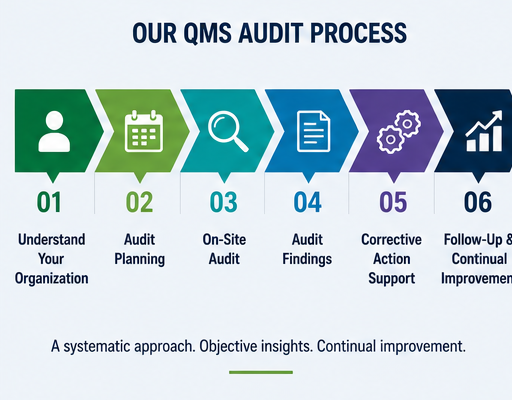
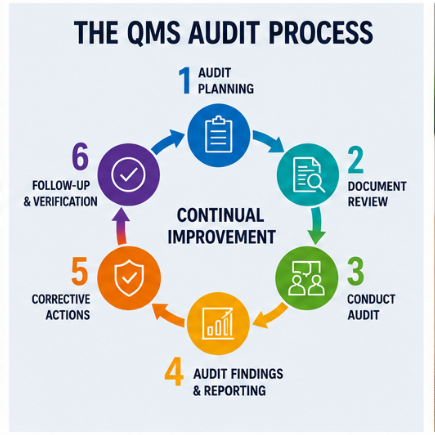
The QMS Audit Process Explained

Understanding the QMS audit process helps to prepare effectively and improve audit outcomes.

Step 1: Audit Planning

Audit planning establishes the structure and direction of the audit.

This stage includes:

  • Defining audit objectives
  • Establishing audit scope
  • Identifying audit criteria
  • Creating audit schedules
  • Selecting auditors

Proper audit planning ensures that the audit is organized, focused, and effective.

Step 2: Document Review

Auditors review documentation to evaluate whether the Quality Management System is adequately documented and aligned with requirements.

Documents reviewed may include:

  • Quality manuals
  • Procedures
  • Work instructions
  • Policies
  • Process maps
  • Audit reports
  • Corrective action records

Strong documentation supports auditable systems and improves compliance.

Step 3: Conducting the Audit

During the audit, auditors gather objective evidence through:

  • Employee interviews
  • Process observations
  • Record reviews
  • Sampling activities
  • Facility inspections

QMS auditing focuses on verifying whether documented processes are effectively implemented in practice.

At this stage, auditors assess process effectiveness, employee competence, risk management, and operational controls.

Step 4: Audit Findings and Nonconformities

After collecting evidence, auditors identify findings and evaluate compliance.

Audit findings may include:

  • Conformities
  • Observations
  • Opportunities for improvement
  • Minor nonconformities
  • Major nonconformities

Nonconformities occur when requirements are not met or when evidence demonstrates ineffective implementation.

Step 5: Corrective Actions

Organizations must address audit findings through effective corrective actions.

Corrective action activities may include:

  • Root cause analysis
  • Corrective action planning
  • Implementation of improvements
  • Verification of effectiveness

Strong corrective action routines help prevent recurring problems and improve overall system performance.

Step 6: Audit Reporting and Follow-Up

The QMS audit concludes with a formal audit report, which summarises:

  • Audit scope
  • Findings
  • Nonconformities
  • Strengths
  • Opportunities for improvement
  • Recommendations

Follow-up activities verify that corrective actions have been implemented effectively.

Regular follow-up audits support continuous improvement and long-term compliance.

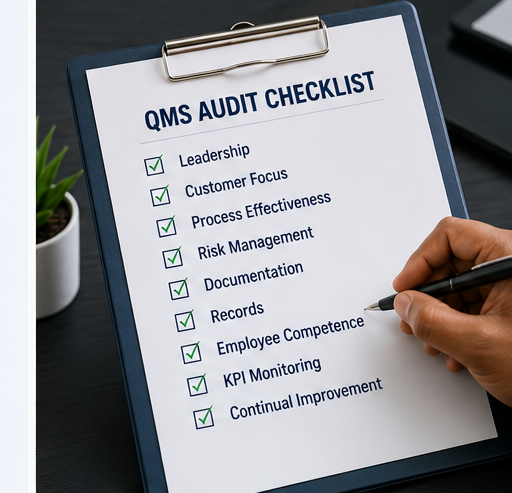
What QMS Auditors Look For During Audits

Professional QMS Auditors evaluate multiple aspects of the Quality Management System to determine whether it is effectively implemented, properly maintained, and capable of achieving intended results.

The most commonly evaluated aspects include:

Process Effectiveness

Auditors assess whether organizational processes are functioning effectively and consistently achieving planned objectives. 

They evaluate how well processes contribute to product quality, customer satisfaction, and overall business performance.

Compliance with Procedures

Employees are expected to follow documented procedures, work instructions, and company policies consistently. 

Auditors verify whether actual practices align with established procedures and system requirements.

Document Control

Auditors review how organizations manage QMS documentation to ensure documents are current, approved, accessible, and protected from unauthorized changes. 

Effective document control helps maintain consistency and compliance across operations.

Record Keeping

Organizations must maintain accurate and complete records to demonstrate that processes are implemented effectively. 

Auditors examine records such as inspection reports, training records, audit reports, and corrective action records as objective evidence of compliance.

Risk Management

Businesses are expected to identify, evaluate, and manage operational risks that could affect product quality, compliance, or customer satisfaction. Auditors assess how effectively risk-based thinking is integrated into business processes.

KPI Monitoring

Auditors evaluate whether organizations monitor and analyze Key Performance Indicators (KPIs) and process performance data regularly. 

Effective monitoring helps businesses identify trends, measure effectiveness, and drive continual improvement.
Employee Competence

Employees must understand their responsibilities, quality objectives, and relevant procedures within the Quality Management System. 

Auditors assess staff competence through interviews, training records, and observations of work activities.

Management Review

Leadership plays a critical role in maintaining an effective QMS. 

Auditors evaluate whether top management regularly reviews system performance, addresses improvement opportunities, allocates resources, and supports continual improvement initiatives.

Common QMS Audit Findings

Many organizations experience recurring issues during QMS audits that can affect compliance, operational performance, and certification readiness.

Here are some of the most common and recurring QMS Audit findings.

Incomplete Documentation

Most organizations often have missing, outdated, or poorly controlled procedures, forms, and records. Inadequate documentation can make it difficult to demonstrate compliance and maintain consistency across processes.

Missing Evidence

Some organizations fail to maintain sufficient records showing that processes are being implemented as planned..

Ineffective Corrective Actions

Corrective actions may fail when organizations address symptoms instead of identifying and eliminating the true root causes of problems. Weak corrective action routines can lead to recurring nonconformities.

Poor Process Monitoring

Many businesses lack effective Key Performance Indicators (KPIs), process measurements, or performance analysis systems. Without proper monitoring, it becomes difficult to evaluate whether processes are achieving intended results.

Lack of Employee Awareness

Employees may not fully understand company procedures, quality objectives, or their responsibilities within the Quality Management System. This often leads to inconsistent implementation of processes.

Weak Risk Management

Failure to identify, assess, and control operational risks can negatively affect product quality, compliance, and business performance. Effective risk-based thinking is essential for maintaining a strong QMS.

QMS Auditing and ISO 9001

ISO 9001 standard places significant emphasis on auditing as a tool for continual improvement.

According to ISO 9001 Clause 9.2, organizations must:

  • Conduct internal audits at planned intervals
  • Verify system conformity
  • Evaluate implementation effectiveness
  • Maintain audit records
  • Address audit findings appropriately

Internal auditing is one of the most important components of an effective Quality Management System.

Internal Audit Services Kenya

Many businesses lack the internal resources or expertise required to conduct effective audits.

Professional Internal Audit Services in Kenya help organizations:

  • Conduct independent assessments
  • Improve objectivity
  • Strengthen compliance
  • Identify operational gaps
  • Improve audit effectiveness

External auditors also bring industry experience and practical improvement recommendations.

QMS Auditing Services in Kenya

At SanaSafe Consulting Limited, we provide professional QMS Auditing Services in Kenya to help organizations strengthen compliance, improve operational efficiency, and prepare for certification.

Our services include:

  • Internal QMS audits
  • ISO 9001 audits
  • Supplier audits
  • Gap assessments
  • Corrective action support
  • QMS readiness reviews
  • Audit preparation support
  • Process audits
  • Compliance audits

As experienced QMS Auditors in Kenya, we work closely with organizations to develop effective, auditable systems that support continual improvement and business growth.

How to Prepare for a QMS Audit

Proper preparation improves audit success, reduces stress, and helps your organization demonstrate compliance more effectively during the audit process.

Here are the steps you can take to prepare for a QMS audit effectively:

  1. Conduct Internal Reviews

Before the formal audit, conduct internal reviews to identify gaps, weaknesses, and areas requiring improvement. 

Early identification of issues allows corrective actions to be implemented before the audit takes place.

  1. Organize Documentation

Ensure that all QMS documents and records are current, approved, properly controlled, and easily accessible. Organized documentation helps auditors verify compliance quickly and demonstrates strong document control practices.

  1. Train Employees

Employees should understand their roles, responsibilities, processes, and quality objectives within the Quality Management System. 

Staff training and competence are critical during interviews and process evaluations.

  1. Review Corrective Actions

Verify that previous audit findings, customer complaints, and nonconformities have been addressed effectively through appropriate corrective actions and root cause analysis.

  1. Verify Process Performance

Review Key Performance Indicators (KPIs), monitoring results, and process performance data to confirm that processes are functioning effectively and achieving intended results.

  1. Conduct Mock Audits

Practice or mock audits simulate the actual audit process and help organizations evaluate readiness, identify remaining gaps, and improve employee confidence before the formal audit.

Audit readiness is critical for successful certification and compliance audits.

Choosing the Right QMS Auditors in Kenya

Selecting competent auditors is essential for achieving meaningful audit outcomes.

When choosing QMS Auditors in Kenya, consider factors such as:

Experience and Competence

Choose auditors with strong ISO 9001 knowledge and industry experience.

Industry Knowledge

Industry-specific expertise improves audit relevance and effectiveness.

Practical Audit Approach

Auditors should focus on practical improvement opportunities, not just compliance.

Reporting Quality

Clear, actionable reports support better decision-making. Professional QMS auditors provide valuable insights that support continual improvement and operational excellence.

QMS Audits Frequently Asked Questions

What is a QMS audit?

A QMS audit is a systematic evaluation of a Quality Management System to determine compliance and effectiveness.

Why are QMS audits important?

QMS audits help organizations improve compliance, reduce risks, and strengthen operational performance.

What are the different types of QMS audits?

Common types include internal audits, supplier audits, compliance audits, and certification audits.

How often should QMS audits be conducted?

Organizations should conduct audits at planned intervals based on risks and operational needs.

Why hire external QMS auditors?

External auditors provide independent assessments, technical expertise, and objective improvement recommendations.

Final Thoughts on QMS Auditing

A QMS audit is one of the most powerful tools for improving business performance, strengthening compliance, and supporting continual improvement.

Strong Quality Management Systems supported by professional auditing help businesses improve efficiency, reduce risks, increase customer satisfaction, and maintain long-term operational success.

If your organization is looking for experienced QMS Auditors in Kenya or reliable QMS Auditing Services in Kenya, SanaSafe Consulting Limited is ready to support your quality management and compliance journey.

HACCP Classroom Training

HACCP Implementation and PRPs: How to Strengthen Food Safety (Case Study)

At SanaSafe Consulting Limited, we are committed to helping food businesses build safer, compliant, and more efficient food safety systems through HACCP programs. 

Recently, we had the opportunity to partner with one of our valued clients to conduct comprehensive HACCP implementation and Prerequisite Programs (PRPs) training for their catering kitchen team.

This engagement aimed to strengthen food safety culture, improve operational controls, and prepare the organization for consistent compliance with international food safety standards.

Understanding HACCP and PRPs

Food safety management begins with strong foundational programs. Before a HACCP system can function effectively, organizations must establish robust Prerequisite Programs (PRPs).

PRPs are the basic environmental and operational conditions necessary to produce safe food. These include:

  1. Personal hygiene practices
  2. Cleaning and sanitation procedures
  3. Pest control
  4. Waste management
  5. Equipment maintenance
  6. Supplier control
  7. Allergen management
  8. Storage and temperature control
  9. Prevention of cross-contamination
  10. Staff training and supervision

Once these foundational systems are in place, businesses can successfully implement a Hazard Analysis and Critical Control Points (HACCP) system.

HACCP is a preventive food safety management system that identifies, evaluates, and controls biological, chemical, and physical hazards throughout the food production process.

Rather than relying only on end-product testing, HACCP focuses on preventing food safety hazards before they occur.

Objectives of the Training

The main objective of the training was to equip the client’s staff and management team with practical knowledge and skills necessary to:

  • Understand food safety hazards and risks
  • Implement effective PRPs
  • Develop and maintain HACCP-based controls
  • Improve compliance with food safety regulations
  • Enhance operational consistency and hygiene standards
  • Strengthen food safety culture within the organization

The training also aimed to ensure that employees understood their individual responsibilities in maintaining food safety across all operations.

Key Areas Covered During the Training

1. Introduction to Food Safety Management

We began the training by helping participants understand the importance of food safety in protecting consumers, maintaining brand reputation, and ensuring regulatory compliance.

Topics discussed included:

  • Food contamination risks
  • The cost of poor food safety practices
  • Legal and consumer requirements
  • The role of management commitment in food safety

2. Prerequisite Programs (PRPs)

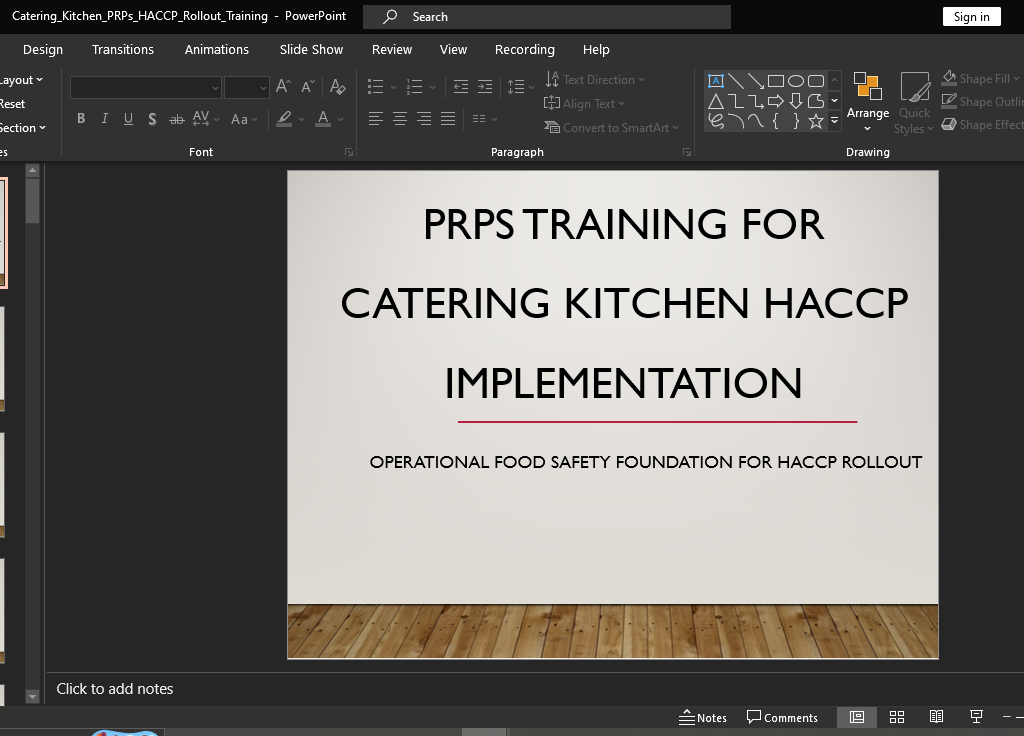
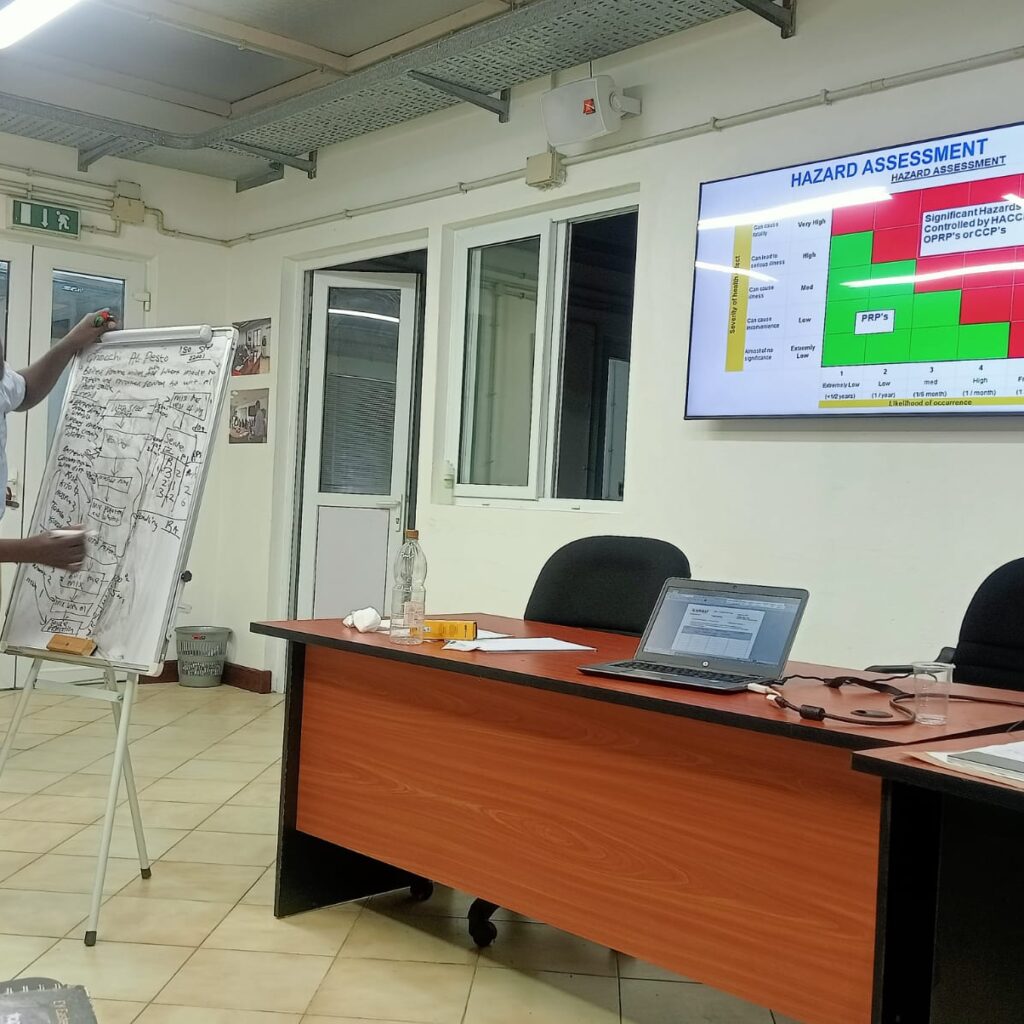
PRPS Training slides

Since PRPs form the foundation of HACCP, a significant part of the training focused on operational hygiene and preventive controls.

The team was trained on:

  • Personal hygiene and handwashing practices
  • Cleaning and sanitation procedures
  • Equipment and facility hygiene
  • Waste handling and disposal
  • Pest prevention measures
  • Safe storage and handling of raw materials
  • Temperature monitoring and control
  • Cross-contamination prevention
  • Supplier control procedures 
  • Staff health and hygiene reporting procedures

Practical examples and workplace scenarios were used to help staff relate the concepts to their daily activities.

3. Cross-Contamination Prevention: A Critical Focus Area

One of the major focus areas during the training was cross-contamination prevention.

Cross-contamination occurs when harmful microorganisms, allergens, or foreign materials are transferred from one surface, food product, or person to another.

We emphasized preventive measures such as:

  • Separate storage and handling of raw and ready-to-eat foods
  • Proper color coding and separation of equipment and utensils, such as chopping boards and knives.
  • Effective hand hygiene practices
  • Proper cleaning and sanitization procedures
  • Safe storage arrangements
  • Controlled movement of personnel and materials in the kitchen

These measures are critical in reducing food safety risks and maintaining product integrity.

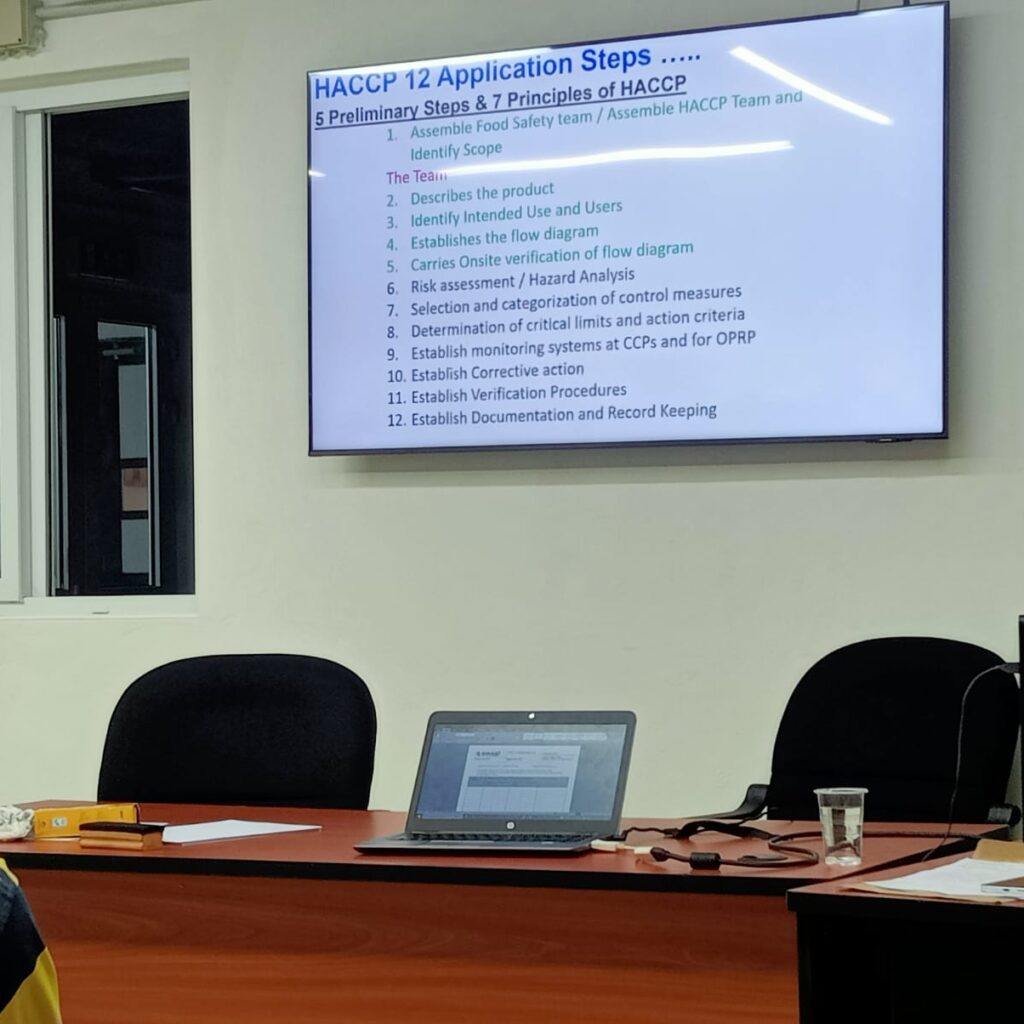
HACCP Implementation Training

After the PRP training, we moved to the HACCP implementation section, which focused on the practical application of the seven HACCP principles.

HACCP Analysis training

Participants were guided through:

The 7 Principles of HACCP

  1. Conducting hazard analysis
  2. Determining Critical Control Points (CCPs)
  3. Establishing critical limits
  4. Establishing monitoring procedures
  5. Establishing corrective actions
  6. Establishing verification procedures
  7. Establishing documentation and record-keeping systems

The training included practical exercises to help the team identify hazards within their processes and determine suitable control measures.

Importance of Documentation and Record Keeping

Effective systems, such as food safety systems and Quality management systems (QMS), depend heavily on proper documentation.

During the training, we highlighted the importance of maintaining accurate records for:

  • Temperature monitoring
  • Cleaning schedules
  • Pest control activities
  • Corrective actions
  • Staff training
  • Supplier approvals
  • Equipment maintenance
  • Verification activities

Good documentation not only supports compliance but also improves traceability, accountability, and continuous improvement.

Interactive and Practical Learning Approach

At SanaSafe Consulting Limited, we believe that effective training should be practical, engaging, and industry-specific.

Interactive learning
Trainer inspecting the freezer

The session included:

  • Interactive discussions
  • Real-life food safety scenarios
  • Practical demonstrations in the kitchen
  • Q&A sessions
  • Step-by-step process-based hazard identification 

This hands-on approach helped participants better understand how food safety principles apply directly to their day-to-day operations.

Benefits to the Client

Following the HACCP training and implementation support, our client felt better positioned to:

  1. Strengthen food safety compliance
  2. Reduce contamination risks
  3. Improve operational consistency
  4. Enhance consumer confidence
  5. Build a stronger food safety culture
  6. Improve preparedness for internal audits and inspections

Most importantly, the organisation now has a stronger foundation for consistently producing safe, high-quality food products.

Our Commitment to Food Safety Excellence

Food safety is not a one-time activity. Rather, it’s a continuous process that requires commitment, training, monitoring, and continuous improvement.

At SanaSafe, we continue to support organizations across the food and beverage industry through:

Our goal is to help you build practical, compliant, and sustainable food safety systems that protect consumers and support business growth.

Need HACCP Implementation or Food Safety Training for Your Organization?

HACCP and PRP Training session

Whether you operate a restaurant, food manufacturing facility, catering business, bakery, hotel kitchen, or food distribution company, implementing effective food safety systems is essential.

Contact us today to learn how we can support you with HACCP implementation, PRPs training, food safety audits, and quality management solutions tailored to your operations.

HACCP Training Gallery:

pdca cycle

PDCA Cycle: Understanding the Engine Behind a Successful QMS.

Achieving quality excellence requires more than just meeting compliance standards. It demands a commitment to continuous improvement. 

As the foundation of ISO 9001, Quality Management System (QMS), the PDCA model is the framework that helps organizations to systematically plan, implement, monitor, and enhance their processes. It transforms quality management from a one-time initiative into a continuous journey of improvement and learning.

This post will help you understand more about the PDCA Cycle, it’s four important phases, the benefits, limitations, and practical applications.

What is the PDCA Cycle?

The PDCA Cycle, also known as the Deming Cycle or Shewhart Cycle, is a four-stage iterative process designed to facilitate ongoing improvement within organizations. Developed by quality pioneer W. Edwards Deming, this model provides a structured approach to problem-solving, innovation, and process optimization.

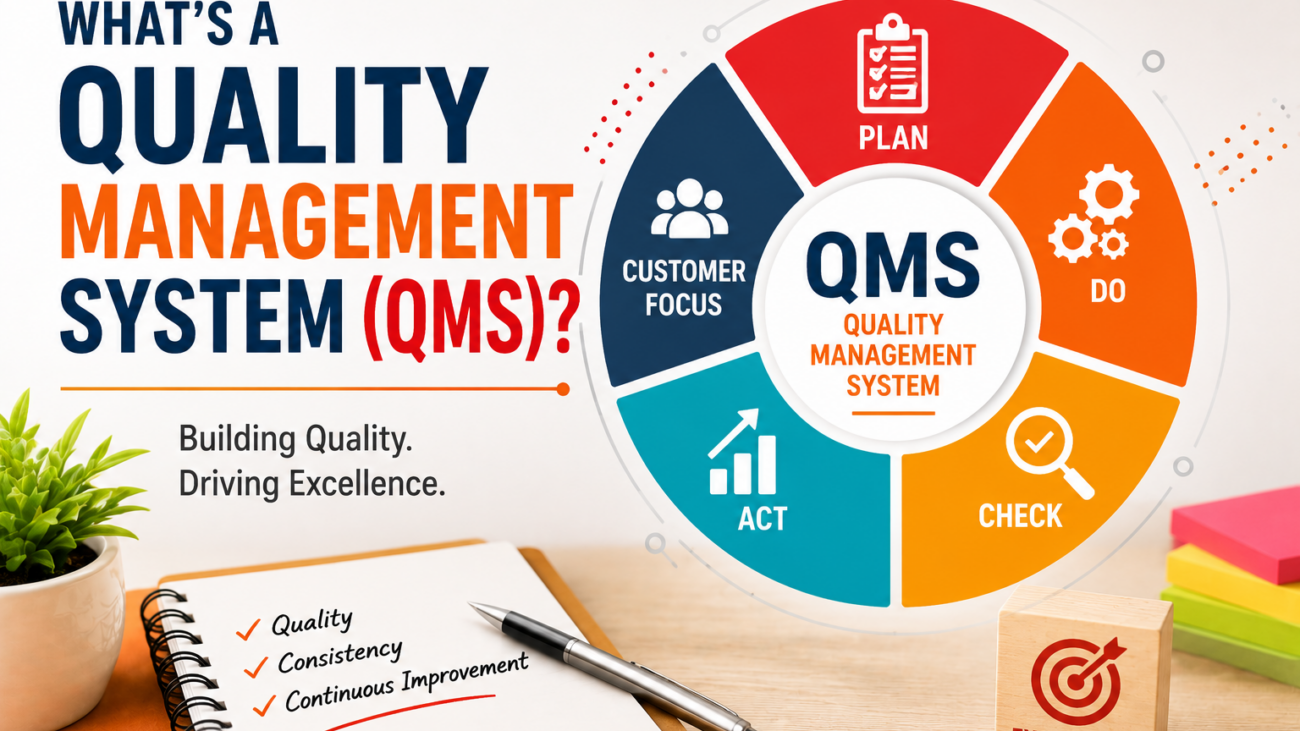
The acronym PDCA stands for Plan, Do, Check, and Act. These are four interrelated steps that, when repeated continuously, create a culture of quality and performance excellence. 

Each step feeds into the next, ensuring that improvement is systematic and sustainable rather than reactive or just one-off.

The Four Stages of the PDCA Cycle: A Detailed Explanation

The four stages of the PDCA Cycle each serve a distinct yet complementary purpose. 

Together, they provide a powerful mechanism for building, maintaining, and continuously improving a Quality Management System (QMS).

1. Plan

The first stage, Plan, focuses on preparation and strategic planning. 

Here, you define what needs improvement by identifying problems, analyzing root causes, and setting clear and measurable objectives. This phase involves gathering data, determining customer needs, and aligning quality objectives with business goals. 

In the context of ISO 9001 QMS implementation, planning includes:


    • Establishing the quality policy

    • Defining processes

    • Assessing risks and opportunities

    • Allocating the resources required for success

A well-thought-out plan sets the foundation for consistent performance and effective decision-making.

2. Do

The next stage, Do, is where the plan is put into action. 

It involves implementing the designed processes, executing improvement activities, and training teams to carry out their tasks effectively. 

During this stage, data is collected to track how well the plan is being followed and to assess its impact. Often, organizations begin with small-scale pilot tests to validate changes before applying them broadly. 

For example, a manufacturer might trial a new inspection process in one production line before rolling it out company-wide. The Do phase transforms strategic intent into tangible action, turning ideas into results.

3. Check

Following implementation, the Check stage emphasizes measurement and evaluation. 

This is where you assess performance by comparing actual results against planned objectives. 

The ‘Check’ phase involves:


    • Analyzing data

    • Reviewing KPIs

    • Conducting internal audits or management reviews to determine whether the desired outcomes were achieved.

If discrepancies arise, further investigation (e.g root cause analysis) is conducted to identify underlying issues. This step is vital for promoting evidence-based decision-making, a key principle of ISO 9001:2015.

It ensures that conclusions are drawn from data evidence rather than assumptions.

4. Act

Finally, the Act stage focuses on standardizing successful improvements and taking corrective or preventive actions when results fall short. 

If the changes implemented in the “Do” phase prove effective, they are documented, communicated, and embedded into standard operating procedures. 

However, if expected goals are not met, the organization identifies what went wrong and implements actions to address the gap. The lessons learned are then fed back into the next “Plan” phase, allowing the cycle to start again. 

This continuous loop fosters ongoing improvement, a hallmark of every successful QMS.

When to Use the PDCA Cycle

The PDCA model is highly versatile and applicable across all types of industries and organizational functions. 

It is most effective when:


    • Implementing or improving a Quality Management System (QMS)

    • Introducing changes to enhance product/service quality

    • Optimizing production or operational processes

    • Managing non-conformities and corrective actions

    • Conducting internal audits and performance evaluations

    • Supporting compliance with ISO 9001:2015 or other management system standards

Whenever your organization aims to plan effectively, execute reliably, monitor performance, and take informed action, the PDCA Cycle serves as an ideal framework.

Benefits of the PDCA Cycle in QMS

The benefits of applying the PDCA Cycle within a Quality Management System are extensive and well-documented. Here are some of its proven benefits:


    1. Promotes Continuous Improvement – Ensures that processes are regularly reviewed, measured, and refined.

    1. Encourages Evidence-Based Decisions – The “Check” phase reinforces data-driven analysis rather than assumptions.

    1. Aligns with ISO 9001 Requirements – PDCA is embedded in the structure of ISO standards, ensuring system-wide consistency.

    1. Improves Efficiency and Productivity – Helps identify waste, streamline operations, and enhance process flow.

    1. Engages Employees at All Levels – Fosters ownership, collaboration, and a shared commitment to quality.

    1. Boosts Customer Satisfaction – Better processes result in consistent quality and fewer complaints.

By adopting the PDCA Cycle, organizations can build resilient systems that deliver measurable results and continuous improvement.

Limitations of the PDCA Cycle

While the PDCA Cycle is highly effective, it’s not without challenges. Here are some challenges organizations might phase when applying this change managemen model.


    • It can be time-consuming when dealing with complex or large-scale systems.

    • The process requires discipline and a culture of accountability to be effective

    • Without management support, the cycle may stall at the “Check” phase, with improvements never fully implemented.

    • In fast-changing environments, lengthy PDCA iterations may lag behind evolving needs.

However, when integrated with modern data analytics or agile management approaches, PDCA remains one of the most reliable tools for sustainable improvement.

PDCA Cycle Examples

Example 1: Customer Complaint Reduction

 A company identifies an increase in customer complaints about delayed deliveries. During the Plan phase, they analyze the causes and set an objective to reduce delays by 25%. In the Do phase, they implement a new logistics tracking system. The Check phase measures the system’s effectiveness over three months, and in the Act phase, the new process is standardized across all regions.

Example 2: Food Safety Process Improvement

A food manufacturer notices recurring packaging defects. They Plan by identifying root causes and setting corrective objectives. In the Do stage, they test a new sealing method. The Check stage compares defect rates before and after implementation, and the Act phase applies the improved method plant-wide while updating SOPs and training.

Example 3: Internal Audit Effectiveness

A company planning its annual ISO 9001 internal audit uses PDCA to enhance efficiency. It Plans by revising its audit schedule, Does by training auditors, Checks audit results for trends, and Acts by improving audit templates and follow-up systems. This continuous loop ensures better compliance and higher audit quality over time.

The PDCA Cycle and ISO 9001 Quality Management

The ISO 9001:2015 standard is fundamentally based on the PDCA Cycle, since each clause corresponds to one of the PDCA stages:


    • Plan: Clauses 4–6 (Context, Leadership, and Planning) focus on establishing the framework, understanding needs, and setting quality objectives.

    • Do: Clauses 7–8 (Support and Operation) address resource management and process execution.

    • Check: Clause 9 (Performance Evaluation) covers monitoring, measurement, internal audits, and analysis.

    • Act: Clause 10 (Improvement) ensures organizations take corrective actions and continually enhance the QMS.

This alignment ensures that the PDCA Cycle is not merely a tool but the structural backbone of every ISO 9001-compliant management system.

Frequently Asked Questions (FAQs)

1. What is the PDCA Cycle?

The PDCA Cycle (Plan–Do–Check–Act) is a continuous improvement model used in quality management to test ideas, implement changes, evaluate results, and standardize successful improvements. It helps organizations refine processes in a systematic, repeatable way.

2. What are the four stages of PDCA?

The four stages of PDCA are:


    • Plan: Identify a problem or goal and develop a strategy to address it.

    • Do: Implement the plan on a small scale to test the change.

    • Check: Evaluate the results and compare them with expected outcomes.

    • Act: Standardize successful changes or take corrective actions and restart the cycle.

3. Is PDCA Lean or Six Sigma?

PDCA is used in both Lean and Six Sigma, but it originated independently through W. Edwards Deming’s quality improvement work. Lean uses PDCA to eliminate waste and improve flow, while Six Sigma applies it to reduce variation and improve process quality.

4. Is PDCA a Kaizen?

PDCA is a core tool within Kaizen, but not the same thing. Kaizen is a broader philosophy of continuous improvement, while PDCA is the structured method used to implement and sustain those improvement.

Conclusion

The PDCA cycle is far more than a theoretical model—it’s the engine behind every successful QMS. By structuring your planning, execution, monitoring and improvement phases, you embed continuous improvement into the DNA of your organisation.

If you’re working to implement or improve a QMS, whether in the food & beverage industry or across any sector, take time to apply the PDCA cycle consciously to each process. The return is not just compliance! It’s better performance, higher efficiency, improved customer satisfaction and a culture of excellence.

If you’d like help in mapping your company’s processes to PDCA, establishing KPIs and driving continuous improvement, check out our QMS Implementation services and QMS auditing services in Kenya and get in touch with us whenever you’re ready!

what is QMS? Sanasafe consultin

What’s a Quality Management System (QMS)? Why Every Business Needs It

Quality, whether of product or service, is the fuel for every organization that strives to earn customer trust, achieve long term growth, and remain profitable. And a robust Quality Management System (QMS) is the engine that runs on that fuel.

Many businesses, however, still view QMS merely as a compliance requirement — something to achieve certification and move on.

But in truth, a well-implemented QMS is far more powerful. It’s a strategic framework that drives business excellence, efficiency, and continuous improvement across all operations.

What Is a Quality Management System (QMS)?

A Quality Management System (QMS) is a structured framework of processes, policies, and procedures that ensures products and services consistently meet customer and regulatory requirements. 

Globally, the ISO 9001 standard provides the foundation for developing and implementing a QMS that supports operational control and long-term success.

While ISO 9001 was initially designed for manufacturing, its principles apply to any organization, from food production to logistics, healthcare, and professional services. 

An effective QMS ensures every part of the business works in sync toward one goal: delivering value and satisfaction to customers.

Benefits of a Quality Management System Beyond Certification

Here are some of the most profound benefits an organization reaps from implementing a quality culture beyond the ISO 9001 Certification: 

1. Improved Efficiency and Process Control

A well-structured QMS helps to eliminate redundancy, reduce errors, and streamline workflows. 

Through process efficiency and data-driven decisions, businesses can save time, cut costs, and improve productivity. Clear documentation and accountability also makes it easier to monitor and enhance organizational performance over time.

2. Enhanced Customer Satisfaction

Customer trust is earned through consistent product/service quality and reliability. 

A well implemented QMS ensures that products and services meet or exceed expectations, leading to higher customer satisfaction and loyalty. 

Additionally, it enables proactive handling of complaints and continuous tracking of customer feedback for improvement.

3. Competitive Advantage

In markets where products and services often appear similar, quality becomes the differentiating factor.

Businesses with ISO 9001 Certification and a strong Quality Management System tend to enjoy a competitive advantage over those without. 

Not only do they attract more clients but also enjoy access to new markets that demand certified quality management practices (e.g global markets).

4. Continuous Improvement Culture

A QMS encourages an ongoing review of systems and performance through internal audits, management reviews, and feedback loops. 

This promotes continuous improvement and risk-based thinking.

Continuous improvement is an essential element for long-term sustainability and adaptability in a changing business environment.

Other benefits of a Quality Management System (QMS) include:


    • Minimize waste and cut operational costs

    • Minimize errors

    • Boost employee engagement

    • Enhance brand reputation

    • Enhance business sustainability

The QMS Compliance Trap: Why Many Businesses Stop Too Soon

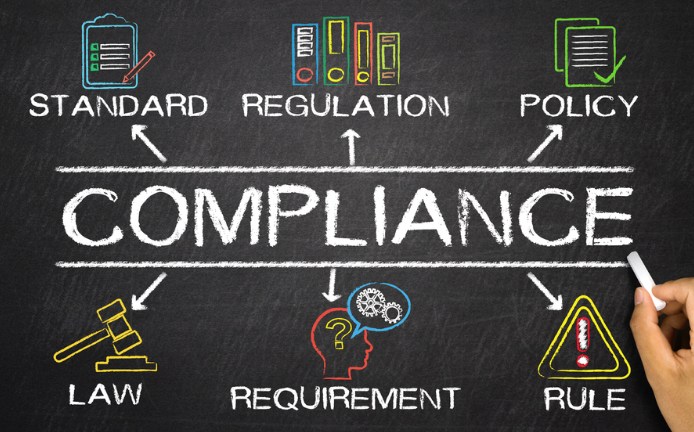
Quality Management Systems (QMS) Compliance

What is the QMS Compliance Trap?

For many companies, implementing a QMS begins and ends with obtaining the coveted ISO 9001 certification. The focus is often on meeting minimum audit requirements rather than creating real improvement. 

This is what we call the compliance trap — when a business focuses on documentation instead of transformation.

While compliance is important for any organization, certification alone doesn’t guarantee better performance. Without genuine commitment, procedures become paperwork, and audits turn into formalities. 

To unlock the true potential of a QMS, organizations must move beyond compliance and embrace quality management in business as a way of thinking and operating.

How to Move from On-Paper QMS Compliance to Operational Excellence

The journey from on-paper compliance to organizational excellence begins with a mindset shift.

This means that the mind must shift from merely “meeting QMS requirements” to “improving performance.” 

A QMS built on the PDCA (Plan-Do-Check-Act) cycle fosters continuous improvement, helping teams identify risks, correct weaknesses, and drive innovation. Leadership also plays a critical role in this transformation. When management demonstrates commitment to quality, employees feel empowered to take ownership of processes and results. 

This engagement creates a quality culture where excellence is everyone’s responsibility, not just that of the quality department.

Learn how to implement an effective QMS from our QMS book, The Fundamentals of QMS.

Quality Management as a Business Strategy

When implemented effectively, a Quality Management System goes beyond satisfying auditors. 

It becomes a foundation for operational excellence, innovation, and customer trust. Businesses that embrace quality as a core strategy often build resilience, adaptability, and enjoy long-term success.

At SanaSafe Consulting, we believe that quality is not a destination but a journey. 

Our role as QMS experts is to help businesses move from on-paper compliance to excellence. This means ensuring that systems not only meet ISO 9001 standards but also deliver measurable improvement in efficiency, satisfaction, and market competitiveness.

If your organization needs assistance with QMS implementation, auditing, or ISO 9001 certification, learn more about our QMS Consulting Services in Kenya.

You can also get our highly recommended QMS book, Fundamentals of QMS,  and learn more about how to implement QMS in your organization.

sanasafe internal auditor

Internal Audits: How Do they Benefit Your Organization?

Internal audits are a crucial component of any effective management system, which includes QMS and Food Safety Management System (FSMS).

However, it goes beyond merely ensuring compliance.

Internal audits help businesses proactively identify and manage food safety risks, improve operational efficiency, and foster a culture of continuous improvement. 

Here are some key benefits of conducting regular internal audits for your food business.

1. Ensures Compliance with Food Safety Standards

One of the primary purposes of internal auditing is to ensure that your food safety practices align with regulatory requirements and certification standards like ISO 22000 and HACCP

By regularly assessing your food production processes, you can identify any non-conformities and rectify them before they escalate into serious issues or lead to regulatory penalties.

Internal audits serve as a crucial tool for maintaining the integrity of your food safety protocols. This helps you stay ahead of changing regulations and customer requirements.

2. Helps Identify and Mitigate Risks Early

Internal audits help you identify potential hazards and risks within your food production system before they become critical. 

By thoroughly evaluating every aspect of your operations, from raw materials, to hygiene practices, to supplier performance, these audits can reveal vulnerabilities that may not be immediately obvious in day-to-day operations.

This early detection, therefore, allows you to take preventive actions, reducing the likelihood of foodborne illnesses, contamination, and costly recalls. 

3. Internal Audits Promote Continuous Improvement

Internal audits aren’t just about finding faults but also about fostering improvement. 

Auditing provides valuable insights into areas where your processes can be optimized. 

By identifying gaps or inefficiencies, they enable you to implement corrective and preventive actions (CAPA) that lead to continuous improvement in your food safety practices.

Regular audits create a feedback loop that encourages your organization to constantly refine its procedures and improve performance.

4. Improves Operational Efficiency

Beyond compliance, internal audits can help streamline operations. 

This is because they highlight inefficiencies, redundancies, or unnecessary steps in your processes that can be adjusted to improve overall workflow. 

For example, audits may uncover outdated practices that slow production or ineffective quality control measures that lead to waste.

By optimizing these processes, your business can achieve higher levels of productivity while reducing unnecessary costs, thereby increasing profits.

5. Enhances Preparedness for External Audits

Internal audits are crucial in preparing for external audits, whether from customers, regulatory bodies, or certification agencies. 

Through these audits, you can identify and correct potential non-conformities ahead of time, ensuring you’re fully prepared for more rigorous external audits.

They help build confidence in your FSMS, making external audits smoother and more successful.

Conclusion: Every Organization Needs Internal Audits

Internal auditing is, therefore, a powerful tool for any business operating within the food and beverage industry.

It ensures ongoing compliance with food safety standards, identifies risks before they escalate, and promotes continuous improvement. By conducting regular internal audits, you enhance operational efficiency, and stay well-prepared for external reviews. 

If you’re looking to implement a HACCP system, QMS or have your quality systems audited, Learn more about our Internal Audit Services in Kenya and QMS auditing support.