
 Cart is empty
One of the biggest threats to food safety in any food handling setup is the presence of food safety hazards.
According to the World Health Organization (WHO), approximately 420,000 people die every year after eating contaminated food. These statistics show how food hazards can pose serious health risks to food consumers and why food businesses need to manage them.
In this article, we will explore the different types of food safety hazards, common causes of food contamination, examples of hazards in food businesses, and practical ways to control and prevent food safety risks.
What Are Food Safety Hazards?
Food safety hazards are biological, chemical, physical, or allergen-related agents that can make food unsafe for consumption. These hazards may occur at any stage of the food chain, including receiving, processing, preparation, packaging, storage, transportation, and serving.
A food safety hazard becomes dangerous when it has the potential to cause illness, injury, or adverse health effects in consumers.
What Causes Food Safety Hazards?
Food safety hazards can result from several factors, including:
- Poor personal hygiene
- Cross-contamination
- Improper cooking temperatures
- Inadequate cleaning and sanitation
- Poor storage conditions
- Contaminated raw materials
- Pest infestation
- Unsafe water sources
- Improper chemical handling
- Poor equipment maintenance
When these issues are not properly controlled, food contamination hazards can increase significantly and affect food safety.
The Four Main Types of Food Safety Hazards
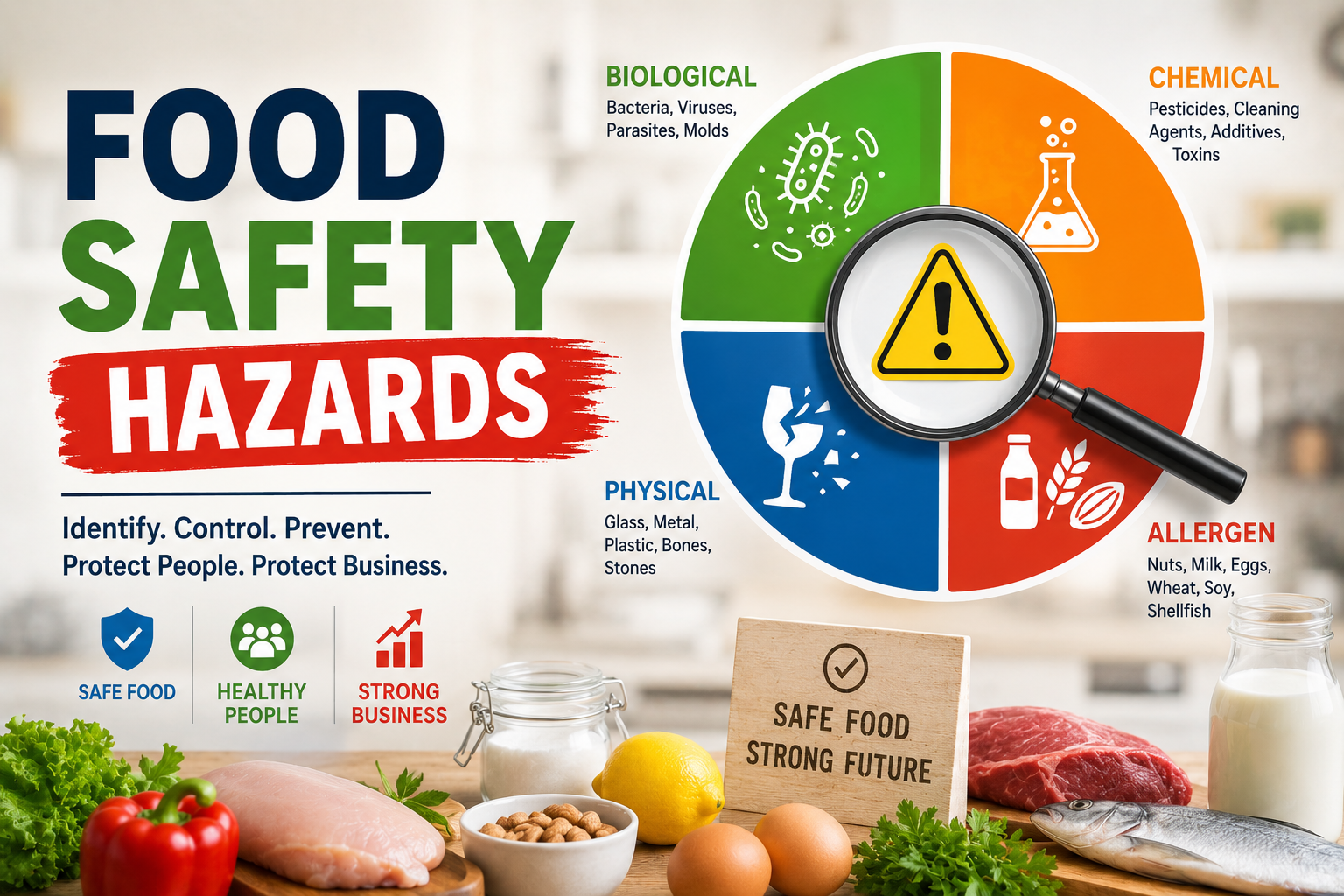
There are four major categories of food safety hazards:
- Biological hazards
- Chemical hazards
- Physical hazards
- Allergen hazards
Understanding these types of food safety hazards is essential for effective hazard management and overall food safety.
- Biological Hazards in Food
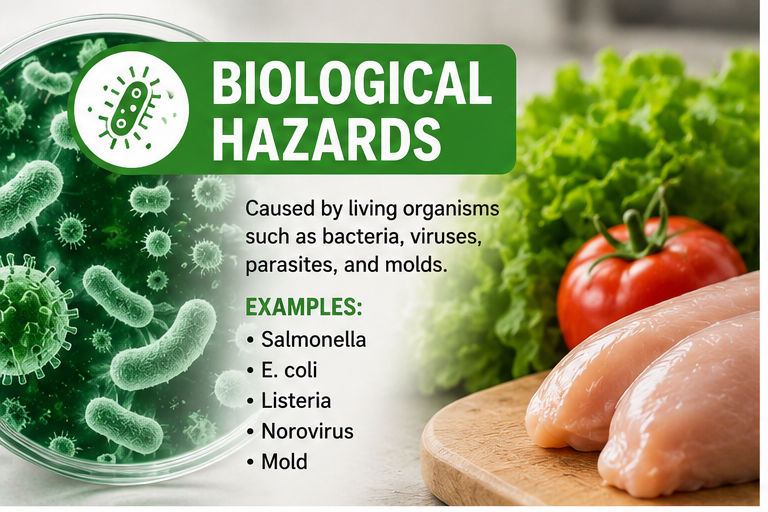
Biological hazards are harmful microorganisms or biological agents that can contaminate food and cause foodborne illnesses. These are among the most common and serious food safety hazards in the food industry.
Examples of biological hazards include:
- Salmonella
- E. coli
- Campylobacter
- Norovirus
- Staphylococcus aureus
- Yeasts and moulds
These microorganisms can grow rapidly under poor food handling and storage conditions.
Biological contamination often occurs through raw meat and poultry, Contaminated water, Poor personal hygiene, Cross-contamination, Improper cooking of food, Inadequate refrigeration, dirty equipment and utensils, or poor pest management.
Restaurants, catering facilities, hotels, and food manufacturing plants are particularly vulnerable if proper food hygiene practices are not followed.
How to Prevent Biological Hazards
Food handling businesses can control biological hazards by implementing the following measures:
- Proper cooking temperatures
- Effective cleaning and sanitation
- Hand washing procedures
- Regular Temperature monitoring
- Pest control
- Cold chain management
- Staff food safety training
- Good Manufacturing Practices (GMPs)
Implementing HACCP systems also helps to identify and control biological hazards at Critical Control Points (CCPs).
- Chemical Hazards in Food
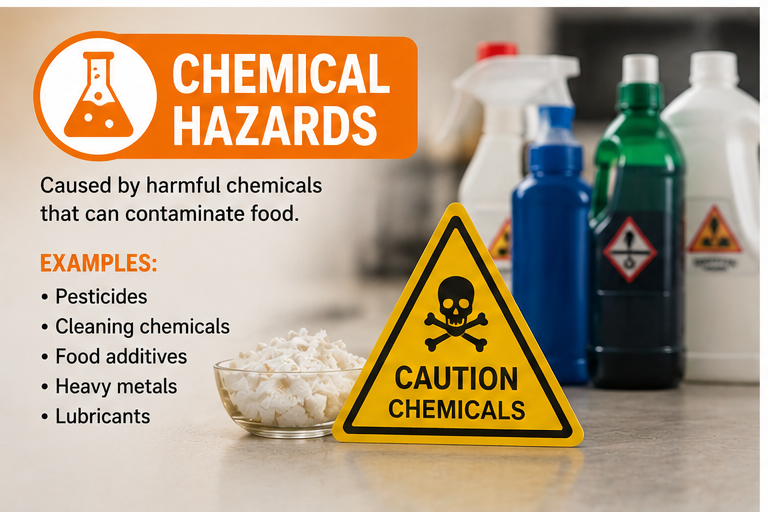
Chemical hazards occur when harmful chemicals contaminate food products. These contaminants may enter food accidentally or through improper handling procedures.
Common chemical hazards in food include:
- Cleaning chemical residues
- Pesticides
- Food additives
- Lubricants
- Heavy metals
- Toxic packaging materials
These hazards often result from improper chemical storage, incorrect chemical usage, poor labelling, supplier contamination, equipment leaks, or the use of excessive food additives.
Chemical contamination can affect food safety and may cause poisoning, allergic reactions, or long-term health complications.
How to Prevent Chemical Hazards
Food businesses can reduce contamination through chemical hazards by:
- Properly labelling chemicals
- Using food-grade chemicals only
- Training employees on the safe handling of chemicals
- Approving reliable suppliers
- Separating chemicals from food storage areas
- Following sanitation procedures carefully
- Physical Hazards in Food
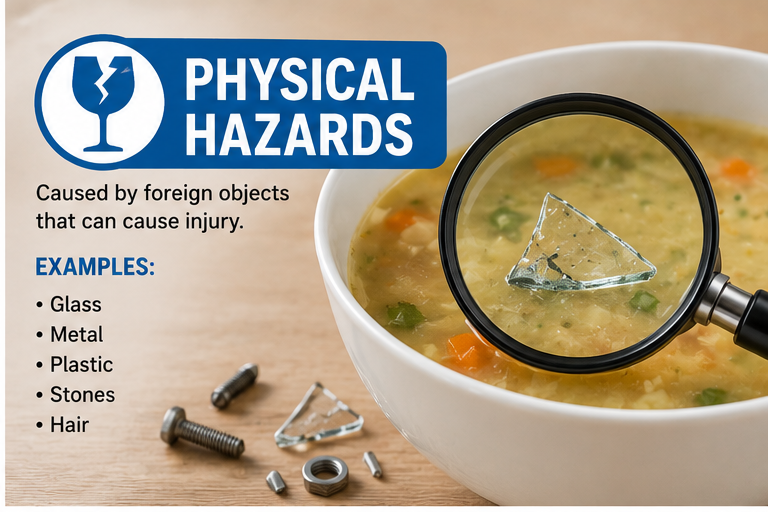
Physical hazards are foreign objects that accidentally enter food products and may cause injuries to consumers.
Examples of physical hazards include:
- Glass fragments
- Metal pieces
- Plastic particles
- Hair
- Stones
- Wood splinters
- Jewelry
- Packaging materials
Physical contamination is a common concern in food manufacturing and processing environments.
Physical hazards often occur due to damaged equipment, poor handling practices, broken utensils, inadequate use of protective clothing, packaging materials, and construction activities, among others.
Without proper controls, these contaminants may enter finished food products and affect consumers.
How to Prevent Physical Hazards
Food businesses can prevent physical hazards through the following measures:
- Frequent equipment maintenance
- Installing metal detectors
- Using sieves and filters
- Glass control procedures
- GMP implementation
- Staff hygiene policies
- Routine inspections
Regular internal audits should also be conducted to identify physical contamination risks and implement control measures.
- Allergen Hazards in Food
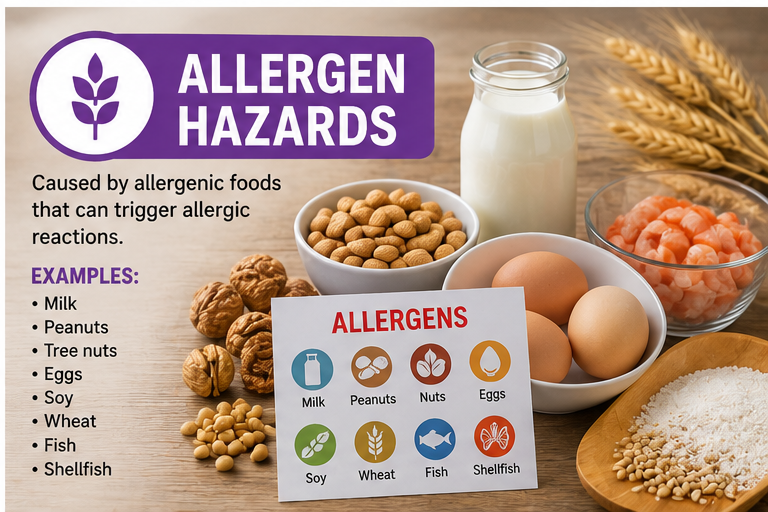
Food allergens are becoming an increasingly important food safety concern globally. Even small amounts of allergens can trigger severe allergic reactions in sensitive consumers.
Common food allergens include:
- Milk
- Eggs
- Fish
- Peanuts
- Soy
- Wheat
- Tree nuts
- Shellfish
Allergen contamination may occur through shared equipment, poor cleaning practices, improper storage, incorrect labelling, and cross-contact during production.
Food allergen management is now a critical part of food safety compliance that should not be ignored.
How to Prevent Allergen Hazards
Allergen hazards can be controlled through measures such as:
- Proper product labeling
- Cleaning validation
- Staff allergen awareness training
- Segregated storage
- Production scheduling controls
Consequences of Poor Food Safety Management
Failure to properly control food safety hazards can have serious consequences for both consumers and businesses.
Some of the major consequences of poor food safety practices include:
- Foodborne Illnesses
Unsafe food can expose consumers to harmful microorganisms, chemicals, allergens, or foreign objects, leading to food poisoning and other health complications.
- Product Recalls
Contaminated or unsafe products may need to be recalled from the market, resulting in significant financial losses and disruption to business operations.
- Legal Penalties and Regulatory Non-Compliance
Failure to comply with food safety regulations and standards can lead to fines, legal action, license suspension, or closure by regulatory authorities.
- Customer Complaints and Loss of Trust
Food safety incidents can reduce customer confidence and damage relationships with clients, retailers, and business partners.
- Damage to Business Reputation
Negative publicity associated with food contamination or poor hygiene can seriously harm a company’s image and brand reputation.
- Financial Losses
Businesses may face increased costs related to recalls, lawsuits, wasted products, corrective actions, and loss of customers.
- Business Closure
In severe cases, repeated food safety failures may force businesses to shut down completely due to legal, financial, or reputational damage.
Implementing strong food safety systems helps businesses reduce these risks significantly.
Food Safety Hazards in HACCP
HACCP (Hazard Analysis and Critical Control Points) is a preventive food safety management system designed to identify and control food safety hazards before they affect consumers.
Hazard analysis involves:
- Identifying food safety hazards
- Evaluating severity and likelihood
- Determining preventive controls
- Establishing monitoring procedures
The HACCP system helps businesses control biological, chemical, physical, and allergen hazards effectively.
Critical Control Points (CCPs) in HACCP
Critical Control Points are stages where hazards can be controlled or eliminated.
Examples of CCPs in a HACCP system include:
- Cooking temperatures
- Chilling processes
- Metal detection
- Pasteurization
- Product storage conditions
Monitoring CCPs is essential for effective food safety management.
Cross-Contamination in Food Safety
Cross-contamination occurs when harmful substances or microorganisms transfer from one surface, food product, or person to another.
Examples include:
- Raw meat contaminating cooked food
- Shared cutting boards
- Poor hand hygiene
- Unclean utensils
Cross-contamination is a major cause of foodborne illnesses in restaurants and catering operations.
Food Safety Hazard Control Measures
Controlling food safety hazards requires a comprehensive food safety management system. Some key food safety controls that businesses should implement to manage food hazards include:
- HACCP implementation
- Good Manufacturing Practices (GMPs)
- Cleaning and sanitation
- Pest control
- Temperature control
- Preventive equipment maintenance
- Supplier approval
- Staff food safety training
- Personal hygiene programs
- Internal audits
Consistent monitoring and verification help ensure these controls remain effective.
Importance of Food Safety Training
Food safety training is essential for helping employees understand hazards and build a strong food safety culture.
Food safety trainings may include:
- HACCP and Pre-Requisite Programs (PRPs) training
- Personal hygiene training
- Cleaning and sanitation
- Allergen management
- Internal auditing
- GMP training
Such trainings often encourage staff accountability, food safety awareness, management commitment, open communication, and continuous improvement in an organization.
Well-trained staff are more likely to follow food safety procedures consistently.
Food Safety Consultancy and Training in Kenya
As food safety requirements continue to develop, more businesses require professional support to strengthen their food safety systems.
At SanaSafe, we have the best Food Safety Trainers and Food Safety Consultants in Kenya, helping businesses build strong food safety and quality management systems (QMS) that meet both local and international standards.
We support food businesses through:
- HACCP training
- Food safety consultancy
- Internal audits
- PRP implementation
- ISO 22000 and FSSC 22000 consultancy
- Food safety audits
- Hygiene and sanitation training
- Food safety documentation support
Our Food Safety Training programs equip teams with practical skills in food hygiene, hazard analysis, GMPs, HACCP principles, internal auditing, sanitation, allergen management, and food safety compliance.
We help food businesses across Kenya and East Africa improve food safety compliance and build effective food safety management systems.
Food Safety Hazards FAQs
What are the 4 types of food safety hazards?
The four main types of food safety hazards are biological, chemical, physical, and allergen hazards.
What is the most common food safety hazard?
Biological hazards, particularly harmful bacteria such as Salmonella and E. coli, are among the most common food safety hazards.
What causes food contamination?
Food contamination may result from poor hygiene, cross-contamination, improper storage, unsafe water, pests, or poor sanitation.
How can food safety hazards be prevented?
Food safety hazards can be prevented through HACCP implementation, proper hygiene, staff training, sanitation, and effective monitoring systems.
What is hazard analysis in HACCP?
Hazard analysis is the process of identifying and evaluating food safety hazards and determining appropriate preventive controls.
Final Thoughts on Food Safety Hazards
Food hazards can occur at any stage of food production and handling. However, the risks can be significantly reduced through proper hazard analysis, HACCP implementation, staff training, and effective food safety controls.
Managing food safety hazards is essential for protecting consumers, improving food quality, and maintaining compliance within the food industry. It also strengthens customer confidence and business reputation.
If you need support with HACCP implementation or food safety training, contact SanaSafe Consulting and we’ll be ready to help.