
 Cart is empty
Businesses in Kenya, spanning across manufacturing, food processing, healthcare, logistics, construction, and education, are increasingly investing in QMS Auditing Services to evaluate their management systems and drive continual improvement.
A QMS audit provides an independent assessment of how well an organization’s processes meet ISO 9001 requirements, internal procedures, and customer expectations. The work of professional QMS auditors in Kenya is to help businesses identify improvement opportunities, strengthen compliance, and prepare for certification audits.
In this comprehensive guide, you’ll learn what QMS auditing is, why it matters, the different types of audits available, and how professional QMS auditing Kenya services can help improve business performance.
What Are QMS Auditing Services?
QMS auditing services involve the systematic evaluation of an organization’s Quality Management System to determine whether it is effectively implemented and compliant with ISO 9001 requirements and internal procedures.
A Quality Management System audit helps verify that business processes are consistently delivering the intended results.
Unlike QMS consulting, which focuses on designing and implementing management systems, QMS auditing independently evaluates whether those systems are functioning effectively. Audits identify nonconformities, process weaknesses, and opportunities for continual improvement.
Why Businesses in Kenya Need QMS Auditing Services
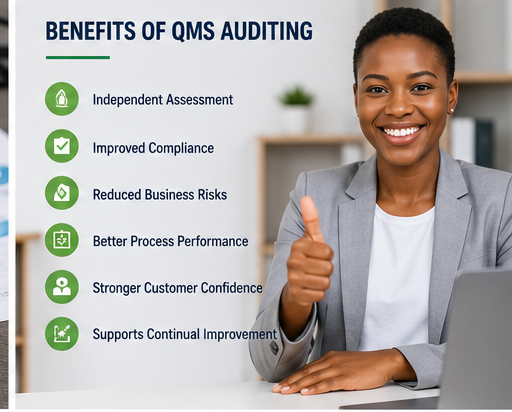
Regular QMS audits help organizations verify compliance, improve efficiency, and strengthen their Quality Management Systems.
Here’s why your business needs QMS Auditing.
Ensuring ISO 9001 Compliance
QMS audits help to verify that your management system complies with ISO 9001 requirements, customer expectations, and internal procedures while identifying any gaps that require corrective action.
Identifying Process Weaknesses
Audits uncover inefficiencies, documentation gaps, and inconsistent practices that may affect productivity or product quality. Addressing these issues helps improve operational performance.
Improving Customer Satisfaction
Consistent quality leads to fewer complaints, improved reliability, and greater customer confidence.
QMS audits help ensure that your products and services consistently meet customer requirements.
Reducing Operational Risks
Audits identify risks before they become costly problems, helping your business strengthen controls, improve compliance, and prevent recurring nonconformities.
Supporting Business Growth
As organizations expand, audits help standardize processes, improve accountability, and ensure consistent performance across departments or multiple locations.
Preparing for Certification
A pre-certification audit helps your organizations identify gaps before the official ISO 9001 certification audit, increasing the likelihood of a successful outcome.
Types of QMS Auditing Services
Organizations require different types of QMS audits depending on their objectives, regulatory requirements, and stage of QMS implementation.
Professional QMS Auditing Services in Kenya typically include the following:
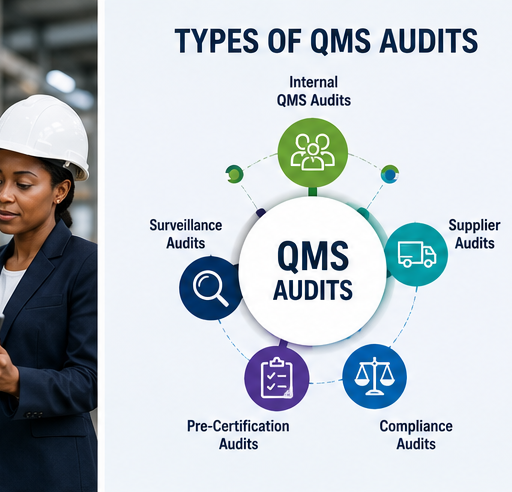
Internal QMS Audits
Internal audits, also known as first-party audits, are conducted by the organization itself or by independent QMS auditors acting on its behalf.
These audits evaluate whether their Quality Management System is effectively implemented, complies with ISO 9001 requirements, and is achieving its intended objectives.
Supplier Audits
Supplier audits evaluate whether suppliers consistently meet quality, contractual, and regulatory requirements. These audits help organizations assess supplier performance, strengthen supply chain reliability, reduce quality risks, and ensure that purchased products and services meet expected standards.
Compliance Audits
Compliance audits assess whether an organization complies with applicable legal requirements, customer specifications, industry regulations, and internal procedures.
They help businesses identify compliance gaps, reduce regulatory risks, and demonstrate accountability to customers and other stakeholders.
Pre-Certification Audits
Pre-certification audits, sometimes called readiness assessments, evaluate whether an organization is prepared for ISO 9001 certification.
They identify documentation gaps, process weaknesses, and nonconformities that should be addressed before the official certification audit, improving the chances of a successful outcome.
Surveillance Audits
Organizations that have achieved ISO 9001 certification must continue demonstrating compliance through periodic surveillance audits. These audits verify that the QMS remains effective, compliant, and continually improving between certification renewal cycles.
Our QMS Audit Process
At SanaSafe Consulting Limited, we follow a structured and practical audit process that provides objective insights while helping organizations strengthen their Quality Management Systems.
Here’s how our typical audit process looks like:
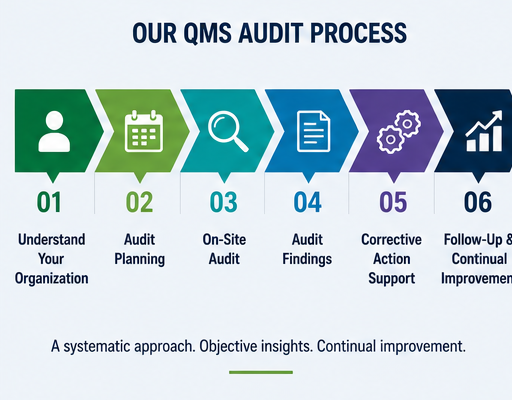
Step 1: Understanding Your Organization
Every audit begins with gaining a clear understanding of your organization, including its business objectives, operational processes, products or services, and the scope of the Quality Management System.
This enables our auditors to plan an audit that reflects your organization’s unique activities and risks.
Step 2: Audit Planning
After understanding your organization, we develop a detailed audit plan outlining the audit schedule, scope, objectives, criteria, and processes to be evaluated.
Our planning follows a risk-based approach to ensure that higher-risk areas receive appropriate attention during the audit.
Step 3: On-Site Audit
Our auditors gather objective evidence through employee interviews, workplace observations, document reviews, and examination of relevant records.
This allows us to evaluate whether processes are being implemented effectively and consistently.
Step 4: Audit Findings
Following the audit, we document our findings, including:
-
- Conformities
-
- Observations
-
- Nonconformities
-
- Opportunities for improvement
Each finding is supported by objective evidence and clearly explained to help your organization understand any identified gaps.
Step 5: Corrective Action Support
Where nonconformities are identified, we support your organization in conducting root cause analysis, developing practical corrective action plans, and verifying that implemented actions effectively address the identified issues.
Step 6: Follow-Up and Continual Improvement
Quality management is an ongoing process.That’s why after the audit, we monitor progress, verify the effectiveness of corrective actions, and provide recommendations that support continual improvement.
Follow-up audits and management reviews help ensure your Quality Management System continues to deliver value and remains compliant with ISO 9001 requirements.
What Professional QMS Auditors Evaluate
Professional Quality Management Auditors in Kenya will assess key elements of your Quality Management System to determine whether it is effective, compliant, and capable of delivering consistent results.
Some of the key areas we evaluate during this audit include:
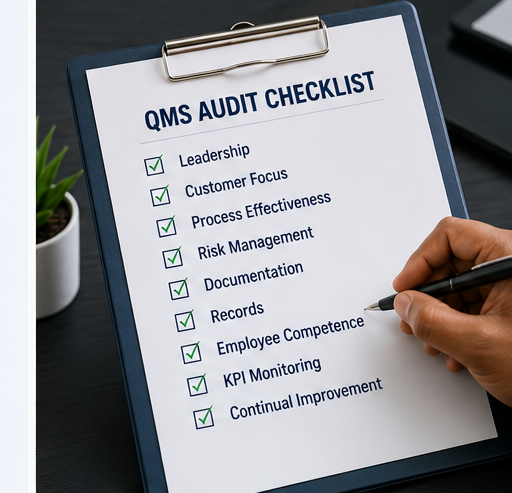
Leadership
Auditors evaluate management’s commitment to quality, resource allocation, and support for the QMS.
Customer Focus
We also assess how well your organization identifies and meets customer requirements while monitoring customer satisfaction.
Process Effectiveness
We verify that processes are well-defined, consistently implemented, and achieve the intended results.
Risk Management
We review how the organization identifies, assesses, and manages risks that may affect quality or compliance.
Documentation
We also check that procedures, policies, and work instructions are current, approved, and properly controlled.
Records
We review records to ensure there is objective evidence that processes are being followed and quality requirements are met.
Employee Competence
We assess whether employees are adequately trained, competent, and aware of their responsibilities within the QMS.
KPI Monitoring
We evaluate Key Performance Indicators (KPIs) to determine whether process performance is regularly monitored and analyzed.
Continual Improvement
Finally, we look for evidence that the organization uses audit findings, corrective actions, and performance data to continually improve its Quality Management System.
Benefits of Hiring Professional QMS Auditors in Kenya
Working with experienced QMS auditors in Kenya provides valuable expertise and objective insights that strengthen your Quality Management System.
Independent Assessment
External auditors provide an unbiased evaluation of your QMS and identify opportunities for improvement.
Industry Expertise
Professional auditors apply industry best practices and extensive ISO 9001 knowledge to every audit.
Faster Certification
Pre-certification audits help identify gaps early, making the certification process smoother and more efficient.
Better Audit Reports
Clear, practical reports provide actionable recommendations to improve compliance and performance.
Improved Compliance
Regular audits help organizations maintain compliance with ISO 9001, legal requirements, and customer expectations.
Reduced Business Risks
Audits identify operational risks before they become costly issues, helping protect business performance.
Stronger Customer Confidence
A well-maintained QMS demonstrates your commitment to quality, building trust with customers and stakeholders.
Continual Improvement
Regular QMS audits encourage ongoing improvements that enhance efficiency, product quality, and long-term business success.
Why Choose SanaSafe for QMS Auditing Services in Kenya?
At SanaSafe Consulting, we help organizations like yours build stronger Quality Management Systems through professional, practical, and value-driven auditing services.
Our goal is not just to identify gaps but to provide practical solutions that improve compliance and business performance.
Here’s why businesses trust SanaSafe:
-
- Experienced ISO 9001/QMS Consultants in Kenya – We have extensive experience implementing and auditing Quality Management Systems across various industries.
-
- Qualified QMS Auditors – Our competent auditors conduct objective, evidence-based audits aligned with ISO 9001 requirements.
-
- Practical Recommendations – We provide actionable recommendations that can be implemented to improve system performance.
-
- Industry-Specific Expertise – We understand the unique quality challenges faced by manufacturing, food processing, healthcare, logistics, construction, education, and service organizations.
-
- Tailored Audit Approach – Every audit is customized to your organization’s size, processes, and business objectives.
-
- Comprehensive Audit Reports – Our reports clearly outline findings, risks, nonconformities, and opportunities for improvement.
-
- Ongoing Consultancy – Beyond audits, we provide continuous support to help you maintain compliance and achieve continual improvement.
QMS Auditing Services in Kenya FAQs
What is a QMS audit?
A QMS audit is a systematic evaluation of an organization’s Quality Management System to determine whether it complies with ISO 9001 requirements, internal procedures, and customer expectations while identifying opportunities for improvement.
Why is QMS auditing important?
QMS auditing helps organizations improve compliance, identify process weaknesses, reduce operational risks, improve customer satisfaction, and support continual improvement.
How much do QMS auditing services cost in Kenya?
The cost of QMS auditing services depends on factors such as the size of the organization, the number of sites, the complexity of operations, and the scope of the audit. Contact SanaSafe for a customized quotation based on your organization’s requirements.
What happens during a QMS audit?
A QMS audit typically includes audit planning, document review, employee interviews, process observations, evidence collection, identification of findings, and recommendations for corrective actions and continual improvement.
Can you outsource QMS auditing services in Kenya?
Yes. Many organizations outsource their internal audits to independent professionals to ensure objectivity, access specialized expertise, and comply with ISO 9001 requirements. Outsourcing also allows businesses to focus on their core operations while receiving an impartial assessment of their Quality Management System.
Looking for Professional QMS Auditing Services in Kenya?
Are you preparing for an ISO 9001 certification, conducting routine internal audits, or just looking to improve the effectiveness of your QMS?
If so, we’re here to help.
We provide a range of QMS services that include:
-
- Internal QMS/ISO 9001 Auditing
-
- Supplier Audits
-
- QMS Gap Assessments and corrective action support
-
- Certification Readiness Assessments
-
- QMS & ISO 9001 Training
We also have a QMS Guidebook that you can purchase and use for easy, self-paced learning.
Contact us today to learn how our trusted Quality Consultants Kenya can help your organization strengthen compliance, improve operational performance, and achieve continual improvement.
Add a Comment